The story
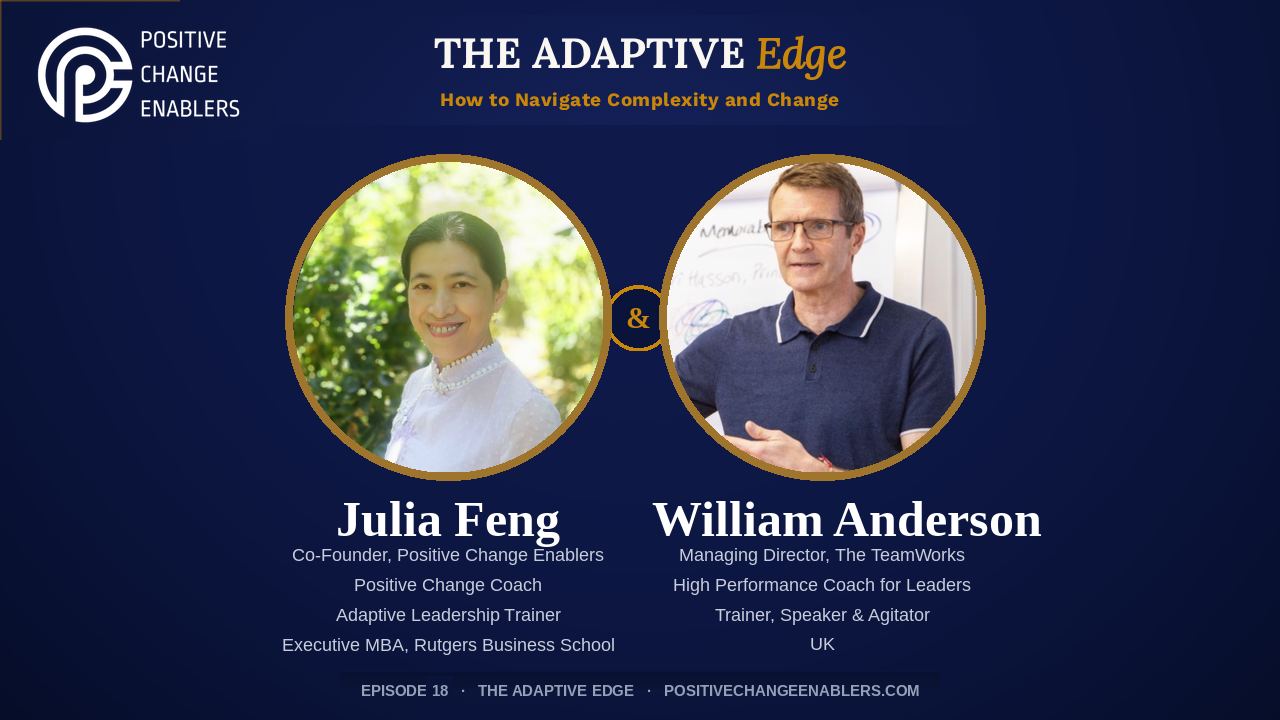
William Anderson is Managing Director of The TeamWorks in the UK, a high performance coach for leaders, a trainer and speaker. His first company brought a new idea to market, and for 18 months nobody understood it. Savings ran down, and he faced two words: back it or sack it. A third door opened when an investor offered to underwrite the business in return for a large share. Giving up control was hard for his ego, yet it led to 15 healthy, profitable years, and to a lesson he still uses: he leads better when other people can shape the work.
“My team know that a statement is there to be challenged.”
The skill at work: Conflict Facilitation (Skill 7)
Conflict Facilitation, which we call Productive Disruption, is the skill of turning disagreement into better thinking instead of avoiding it or letting it become personal. A leader raises the right amount of tension so the group looks harder at the real problem. In William's story it shows up as a deliberate habit of inviting challenge.
A bold statement is an invitation
William calls himself fast, creative and impatient. When he says “we’re going to do this,” it is not a decision. “My team know that a statement is there to be challenged.” He is waiting for someone to say “hang on a minute, have you opened all these doors?”
Building the challenge into the team
He knows he is not good at diving into fine detail, and that he wants to move quickly. So he works with colleagues who say “let’s look at some numbers here” before everyone rushes forward, and he gives them space and time to do that deeper work alongside him. He says he will stop and listen, even when he would rather move on.
Letting ideas get knocked about
When a client brief comes in, he has ideas within minutes. Without a sounding board, that first idea is what the client would get. With his team, the ideas are challenged and “knocked about a bit,” and they often change shape, because, as he puts it, “we feed off each other.”
Treating each question as a new start
Being challenged could feel like a brake for an impatient leader. William turns it around: every question feels like a new challenge, almost a new brief, so he comes back to it with fresh creative energy instead of defending his first answer.
Disruption with a purpose
His role at The TeamWorks is, in his words, chief disruptor: always looking for things to evolve and change. He has learned that he cannot lead well without knowing himself, so he channels his need for speed into an open, collaborative process rather than pushing his first idea through.
Also in this story: Listening for Loss (Skill 4)
William's own turning point was a loss: giving up half of his first company, and with it his picture of himself as the sole owner. As a leader today, he looks for what people are quietly losing. What upsets him most is teams where people have not left but have mentally switched off, because no leader took the time to find out what makes them sparkle. He says that can only be found through conversation and understanding. This link to Skill 4 is our reading of his story; he speaks more about his own loss and about finding people's strengths than about hearing their fears.
Why it matters in complexity
Under pressure, William once saw only two doors. Today he pictures each challenge as a sphere with many doors, and behind every door there are more doors. Productive disagreement is how his team finds the doors he would miss on his own.
Try this
Next time you share an idea with your team, say out loud: “This is a first draft. What am I missing?” Then let the first person who pushes back finish before you respond.
This article is our interpretation of William's story, based on the conversation on The Adaptive Edge Podcast. The framework names are ours; the events and lessons are his own. Quotes are lightly edited from the interview.